
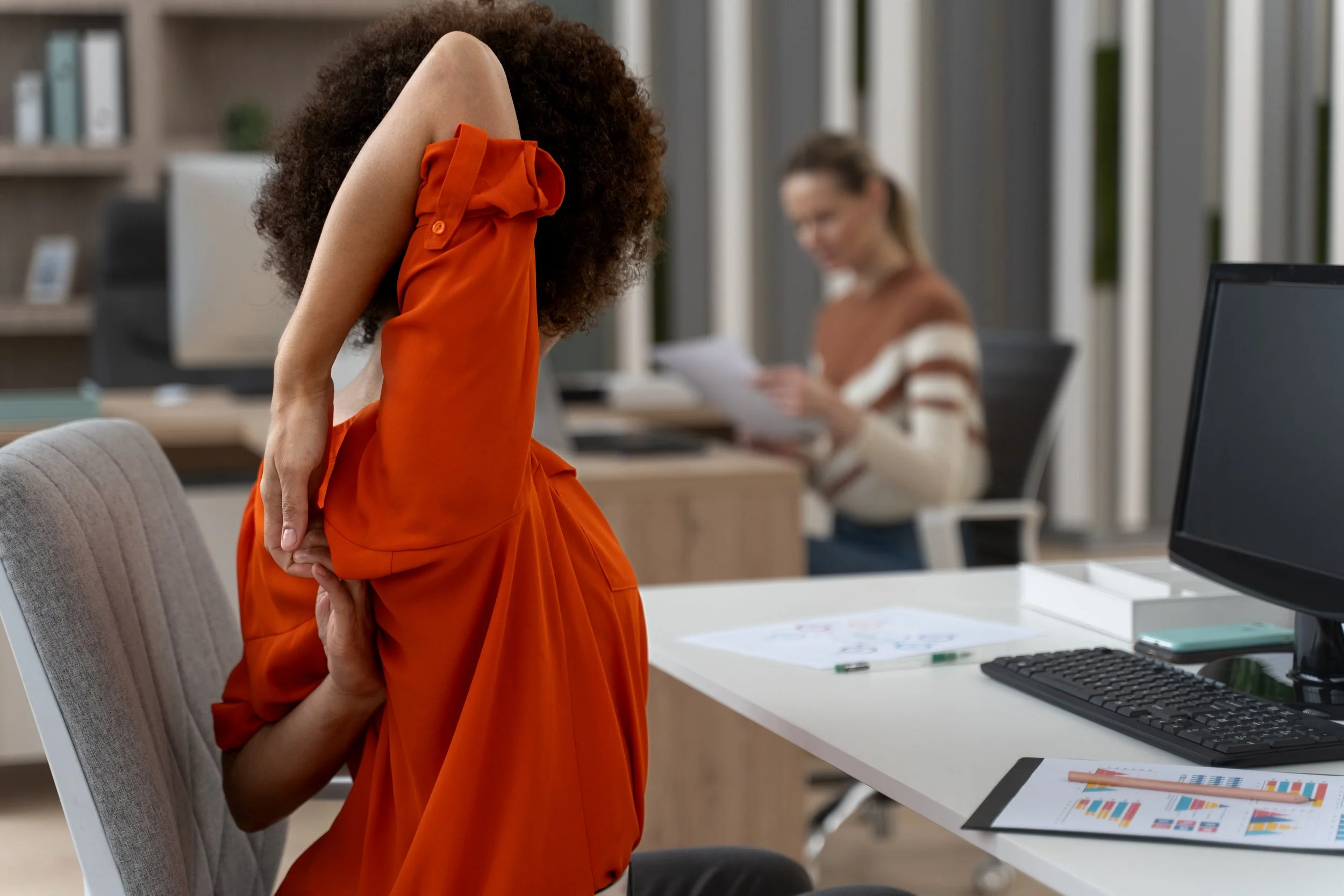
Many of us spend a lot of time sitting throughout the day, usually through school or work. When we’re sitting so often, it can be easy to slip into bad habits that put strain on our posture and body. To combat those issues, it’s important to pay attention to the posture you’re using when you sit and to take frequent breaks.
Tips for Improving your Sitting Posture:

Put your monitor at the right height. For proper posture, keeping the top of the monitor around eye level or slightly below is best so you’re looking forward (and not too far down or up, which puts strain on the neck especially).
Keep elbows close to your body. We often overextend our arms, but this can lead to additional strain on our neck and shoulders. Try to keep your elbows bent between 90 and 120 degrees.
Relax your shoulders. Speaking of shoulders, make sure they’re not rounded or pulled backwards.
Ensure your feet touch the ground. You can also get a footrest if that’s not possible, but having stable feet on the ground is important for maintaining a solid posture.
Reduce crossing your legs. We should really keep our feet on the floor, with ankles in front of our knees, instead of crossing our legs. When we cross our legs, we’re putting uneven strain on our bodies, but if you love to sit with crossed legs and struggle to cut it out entirely, just make sure you’re not sitting in it consistently for long periods of time. Switch positions and keep the body moving.
Switch sitting positions. Speaking of which, in general it’s just helpful to switch up how you’re sitting or where you’re sitting. Having your body locked in one single position for too long isn’t good.
Keep moving. One of the best things in general we can do for our posture is moving. During the work day specifically, find opportunities to take brief walks or stretch out your limbs to help relieve muscle tension. Even a quick lap around your own living room helps to keep blood flowing and avoid building tension.
Fully support your back. If you need to use a back pillow or other back support to ensure your posture then absolutely do it. You want support for your lower back’s curve and to keep your upper back straight.
Support your thighs and hips. Additionally, check your seat is well-padded, with your thighs and hips parallel to the floor. This will help avoid building tension or even uneven tension in your hips and legs.
Overall, none of us are perfect. We’re going to sit weird sometimes or forget we’ve been sitting in the same position for an hour, but when you can find moments to implement these tips, slowly try to build them in. In the long run, they’ll help your body as it ages. Just try to keep moving, be cognizant, listen to where your body is telling you there’s strain or tension and adjust accordingly. With practice, you’ll start to respond without even thinking about it.